
A Hot Soak, Cold Shark, and the Coolest Ice on Earth
Iceland’s culinary scene is a feast for the senses, offering adventurous travelers a taste of the unexpected. From the infamous fermented shark known as hákarl to the robust flavors of Brennivín schnapps, Icelandic cuisine dares you to step out of your comfort zone. Imagine savoring a bowl of langoustine soup so creamy it feels like a culinary masterpiece or sipping glacier-cold vodka cocktails amidst breathtaking landscapes. Whether you’re navigating the icy wonders of February in Iceland or basking in the geothermal warmth of the Blue Lagoon experience, each dish tells a story of tradition and boldness. Join us as we explore the bold flavors and unforgettable experiences that await on this Nordic island.
Iceland’s Unforgettable Culinary Adventures
During our time in Iceland, we made the decision to try both whale and puffin—dishes that are deeply rooted in the country’s cultural history. These are not novelty items; they are part of a traditional food system that values sustainability and respect for the natural world. In many ways, Icelandic cuisine reflects the harsh conditions of the land—nothing is wasted, and every part of the animal is used.
For centuries, survival in Iceland meant relying on what the environment provided. That legacy lives on in the food: simple, resourceful, and often challenging to the modern palate.
Trying these dishes wasn’t about thrill-seeking—it was about understanding a place through its traditions. The experience left me with mixed feelings: respect for the people and the land, and a quiet reflection on the choices we make as travelers.
Iceland’s food scene is not always easy, but it is honest. It’s rooted in history, shaped by necessity, and now, increasingly, guided by sustainability and conscious sourcing. Whether you’re sampling smoked lamb, arctic char, fermented shark, or modern plant-forward creations, you’ll find that Iceland invites you to engage with its food—not just consume it.
It’s not about what’s easy. It’s about what’s real.
Unique Icelandic Dishes to Try
Iceland’s cuisine is shaped by its harsh climate and abundant seafood. Here are some unique dishes that showcase the country’s culinary creativity:
- Plokkfiskur: A comforting fish stew made with cod or haddock, potatoes, and onions.
- Hangikjöt: Smoked lamb traditionally served during Christmas celebrations.
- Skyr: A high-protein dairy product similar to yogurt, often served with berries or as a dessert.
- Rúgbrauð: Dark, sweet rye bread often baked using geothermal heat.
- Harðfiskur: Dried fish, usually cod or haddock, eaten as a protein-rich snack.
For those seeking a more adventurous culinary experience, Compass & Cork offers custom food tours that delve deep into Iceland’s gastronomic traditions.
Fermented Shark: Tasting Hákarl
Hákarl — Iceland’s Fermented Shark (a.k.a. the Bite You’ll Never Forget)
Trying hákarl is something you do in Iceland once—on purpose.
This isn’t just food. It’s folklore, chemistry, and a dare wrapped into one rubbery little cube.
Hákarl is made from Greenland shark, a species whose fresh meat is toxic due to extremely high levels of urea and trimethylamine oxide—compounds that act like antifreeze for survival in Arctic waters. Eating it raw? Dangerous. Possibly fatal. But centuries ago, Icelanders figured out how to make it safe: ferment it underground for months, then air-dry it for several more.
The result? A delicacy that demands courage, curiosity, and a strong stomach.
The Taste (and the Smell… oh, the Smell)
Imagine the stinkiest, moldiest French cheese you’ve ever encountered. Now wrap it in a gym sock, store it in a hockey bag, leave it in a hot car for a week, and finish it with a splash of ammonia. That’s the general idea.
It’s served in small cubes—because anything larger would qualify as biological warfare.
And for my Chicago friends: think Malört, but chewy. That same instant regret. That same burning question of “Why did I do this?”
The texture is dense and rubbery, the flavor sharp and sour, and it clings to your palate with relentless, almost aggressive persistence. It doesn’t just linger…it moves in and redecorates your mouth.
“The single worst, most disgusting and terrible tasting thing I’ve ever eaten.”
Anthony Bourdain, on hákarl“ I’m not swallowing that.”
Gordon Ramsay, after trying hákarl in Iceland
Even chefs known for their bold palates struggle with hákarl. If those two culinary legends couldn’t stomach it, you know you’re in for something unforgettable.
Why It’s a Big Deal
All jokes aside, hákarl is deeply tied to Icelandic history. In a landscape where survival meant using every part of every animal, early Icelanders couldn’t afford to waste anything—not even poisonous shark. So they invented a way to make it edible through fermentation and time.
Traditionally, the process looked like this:
- The shark is beheaded and gutted
- The meat is buried in gravelly sand, weighed down with rocks to press out fluids, and left to ferment for 6–12 weeks
- After fermentation, it’s air-dried for months, forming a tough brown crust that’s trimmed away before serving
Modern producers use ventilated containers instead of digging a hole near the sea, but the core idea hasn’t changed. It’s still a dish born of resourcefulness and survival—and that’s what makes it remarkable.
Is It Safe?
Yes—if processed correctly. The fermentation and drying neutralize the shark’s natural toxins. Improperly cured, though, it can cause serious illness. In rare cases, even death.
So no, you shouldn’t try curing your own shark meat in the backyard Airbnb. Icelanders are pros at this. Let them handle it.
Brennivín: The Black Death Chaser
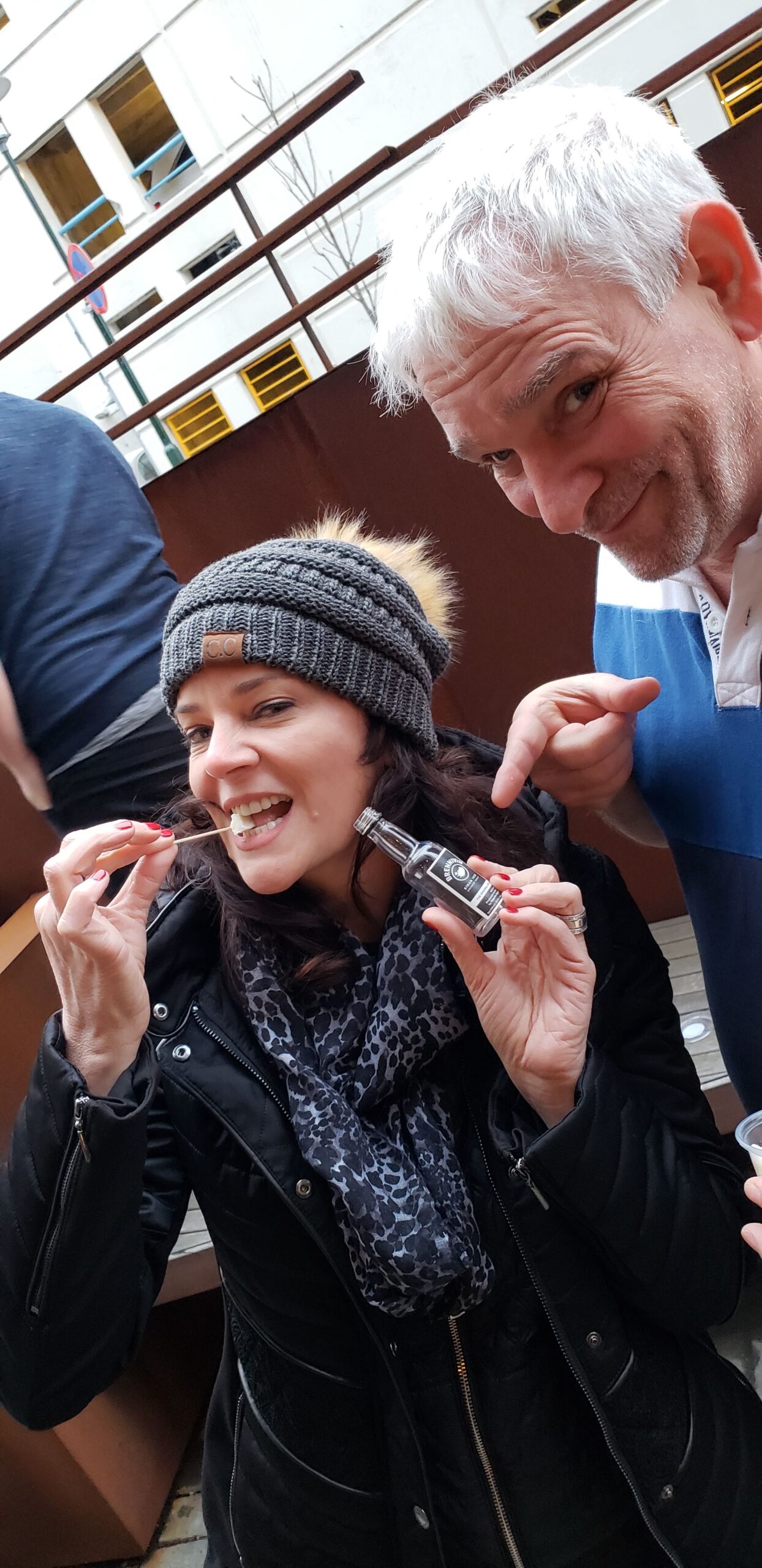
A cube of hákarl almost always comes with a shot of Brennivín, Iceland’s notorious schnapps, nicknamed “Black Death.” Made from fermented potato mash and flavored with caraway, it’s sharp, dry, and unapologetically herbal.
It’s not meant to enhance the shark’s flavor—it’s meant to wash it down and erase all memory of it.
Together, hákarl and Brennivín form a sort of Icelandic initiation ritual. You eat the shark, you grimace, you toss back the schnapps, and then you nod solemnly—because you’ve just survived something ancient and absurdly unforgettable.
My Experience
I tried it with a local, which made the moment feel less like a dare and more like a rite of passage. We laughed, we winced, we toasted to Iceland’s grit. And while I’ll never crave it again, I’ll always remember it.
This wasn’t just a “weird food” moment. It was a window into Iceland’s history, resourcefulness, and respect for nature. And in its own strange, pungent way—it was beautiful. Hákarl, or fermented shark, is a traditional Icelandic delicacy that’s not for the faint of heart.
But I’ll always remember it.
Because hákarl isn’t just about taste. It’s about history, resilience, and honoring the traditions of a country that learned to thrive in the harshest conditions imaginable. It’s a bite of Iceland’s past—and in its own strange, pungent way, it’s kind of beautiful.
I won’t lie: it was disgusting. And I’ll never eat it again.
The Blue Lagoon Retreat — Iceland’s True Sanctuary
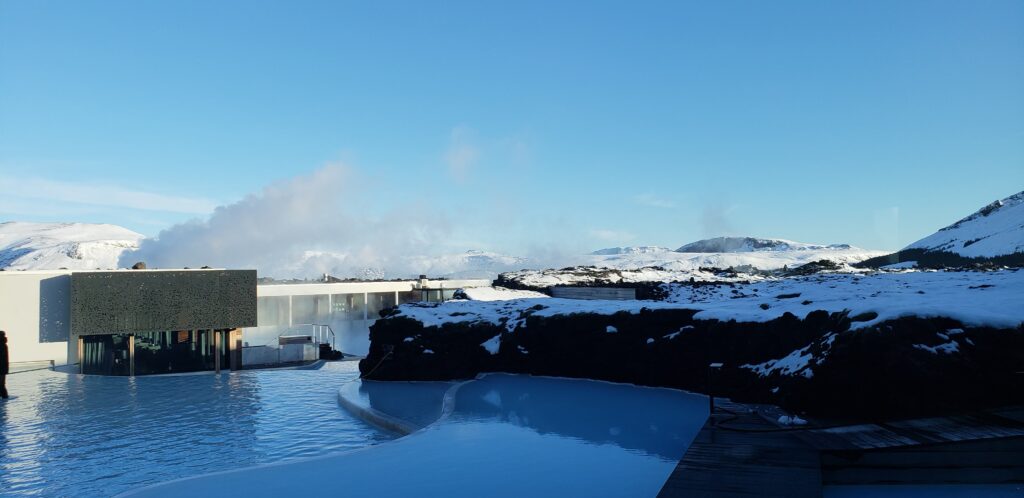
Yes, the Blue Lagoon is well known. Yes, it’s visited by travelers from around the world. And yes—you should absolutely go.
But if you’re looking for something beyond the ordinary, I urge you to book the Retreat Hotel and Spa, the private side of the Blue Lagoon that many tourists never even know exists.
This is where everything changes.
The moment you arrive, you’re met with a quiet sense of calm and care. A private Mercedes-Benz transfer whisks you away from the public entrance and brings you directly to the Retreat’s front door—no crowds, no noise, no waiting in line. Just peace.
Inside, the experience unfolds with intention.
- The in-water bar allows you to sip sparkling wine while floating in warm, mineral-rich waters. There’s no rush, no chatter—just stillness and steam rising around you.
- The Mask Bar invites you to coat your skin with Iceland’s healing elements: silica, algae, lava, and minerals. Each layer is part ritual, part renewal. You feel it in your skin, but more deeply—you feel it in your mind.
- Steam and sauna rooms carved directly into lava rock offer a grounding warmth that seeps into your body and pulls the stress out of you. It’s elemental, raw, and restorative.
- Private changing rooms provide a quiet place to shower, dress, and breathe. Plush towels and robes are yours to use, and there’s a sense of privacy that allows you to fully exhale.
This is the only place in the world where my mind stopped racing. For a moment, I truly thought I had died—not out of fear, but because it was so peaceful, so silent, and so beautiful. Iceland held me in that moment. It didn’t just slow me down—it brought me back to myself.
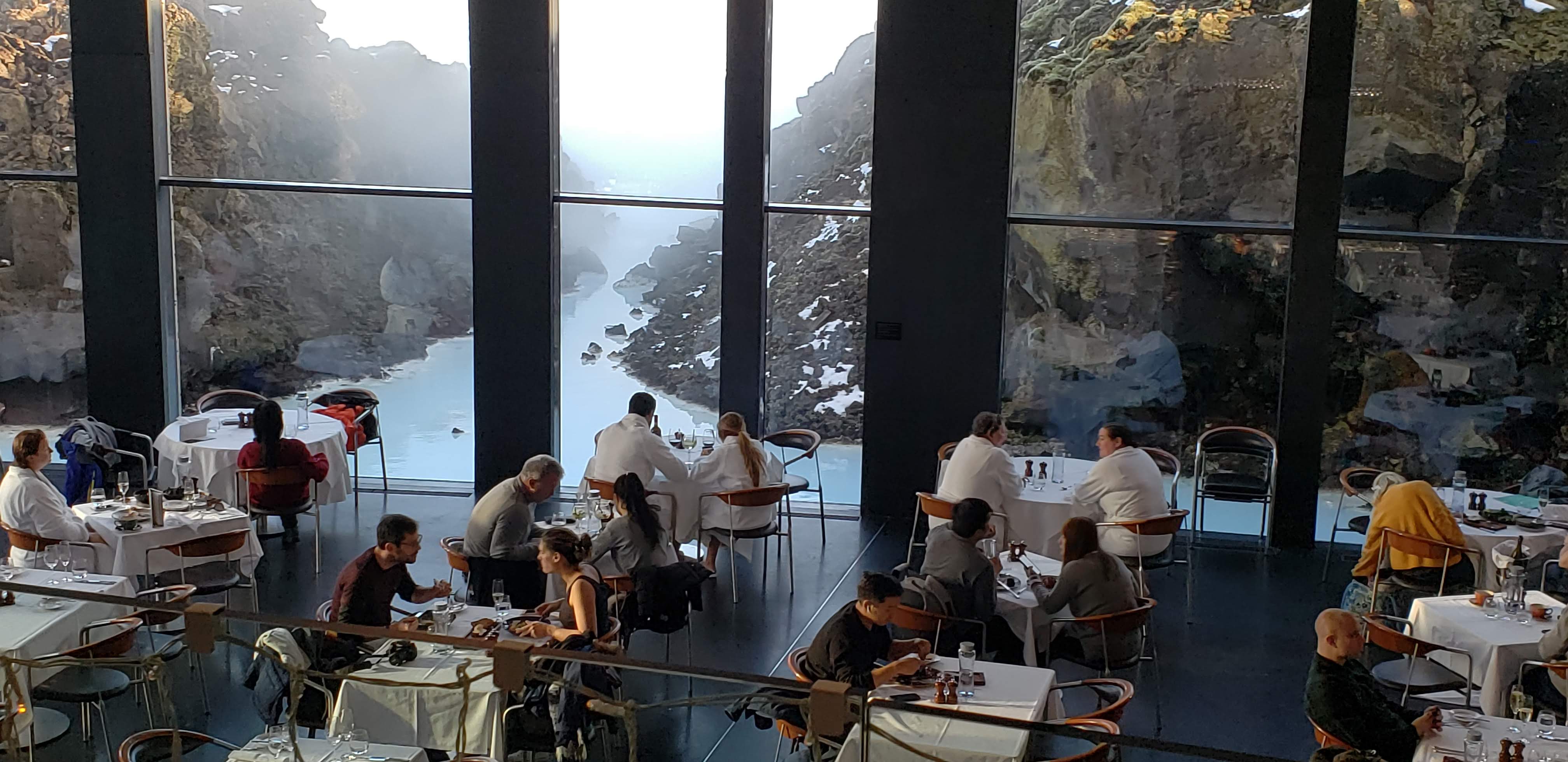
After our time in the Retreat, we had a phenomenal lunch at Lava Restaurant Lava Restaurant, located right on the lagoon’s edge. This is where Icelandic flavors meet clean, elegant presentation in a setting that feels elemental. You can dine in your robe, still wrapped in the afterglow of the spa, or dress and watch the lagoon steam roll past the windows while you eat.
For a more elevated culinary journey, Moss Restaurant, the Blue Lagoon’s flagship fine dining venue, offers a refined tasting menu inspired by Iceland’s ingredients and terrain. With sweeping views over the lava fields and a Michelin star earned in 2023, Moss is more than a restaurant—it’s a moment. A quiet celebration of nature, artistry, and Icelandic soul.
For those staying overnight, the Retreat offers minimalist-luxury suites that frame the surrounding lava fields and lagoon through massive floor-to-ceiling windows. Every detail is intentional. Every moment feels sacred.
Diamond Beach: Fire, Ice, and Everything In Between
No matter how many photos you’ve seen, nothing prepares you for the moment you step onto Diamond Beach.
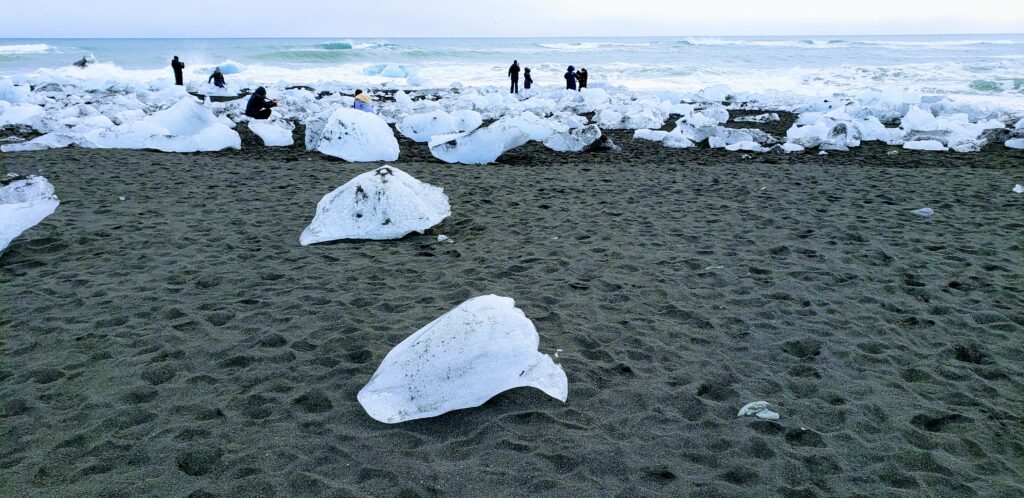
Located near Jökulsárlón Glacier Lagoon on Iceland’s southern coast, this stretch of coastline is unlike anywhere else on Earth. The volcanic black sand, dark and silky, stretches out beneath your feet while massive chunks of glacier ice—broken off from nearby Breiðamerkurjökull—glitter along the shore like diamonds tossed by the sea.
And they’re not small. Some are the size of watermelons. Others, like the ones we climbed and sat on, are as large as a car. Clear, blue, or milky white, each one shaped by the ocean, wind, and time.
The waves crash with surprising force—cold, wild, unpredictable. One minute it’s quiet and still, the next you’re dodging a rogue swell with your boots barely holding the line.
We stayed for hours. Sitting on icebergs. Snapping photos. Watching the contrast of light and shadow move across the sand. Iceland’s volcanic past and glacial present collide here, and the result is surreal—harsh and breathtaking, beautiful and humbling.
There’s a stillness to this place that stays with you. It feels ancient, sacred. Otherworldly.
Of all the landscapes we explored in Iceland, Diamond Beach is the one that etched itself into my memory the deepest. It looks like the end of the world, or the beginning of one. And being there, wrapped in layers, cheeks stung by the cold—it reminded me how small we are, and how lucky we are to stand in places like this.
Volcanoes, Ice Trucks & Caves of Blue Fire
There are places in the world that feel surreal—and then there’s Iceland, where every turn looks like a movie set designed by nature itself.
One day we found ourselves walking on an active volcano, steam rising from the earth like the ground was exhaling. The terrain beneath our boots felt alive—warm in some places, brittle and cracked in others. There’s something thrilling about knowing the land you’re walking on could shift at any time, that you’re standing on the edge of something primal and powerful.
From there, the landscapes only got more extreme.
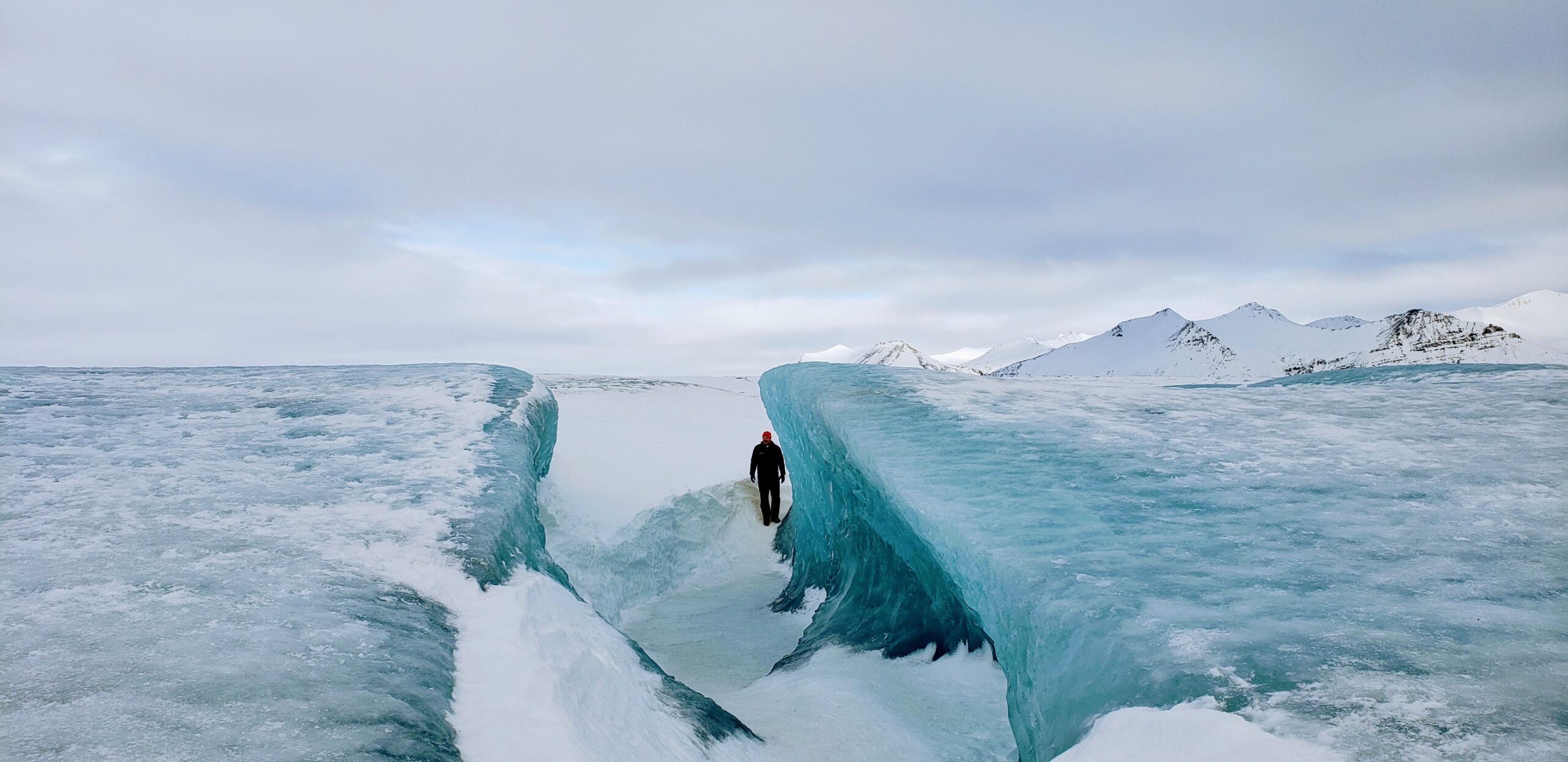
We drove up the side of a glacier, not a metaphor, an actual glacier—in a massive Mercedes ice truck, custom built to grip the frozen slope like it was nothing.
Then came the ice cave. Quick video of our truck ride up the glacier
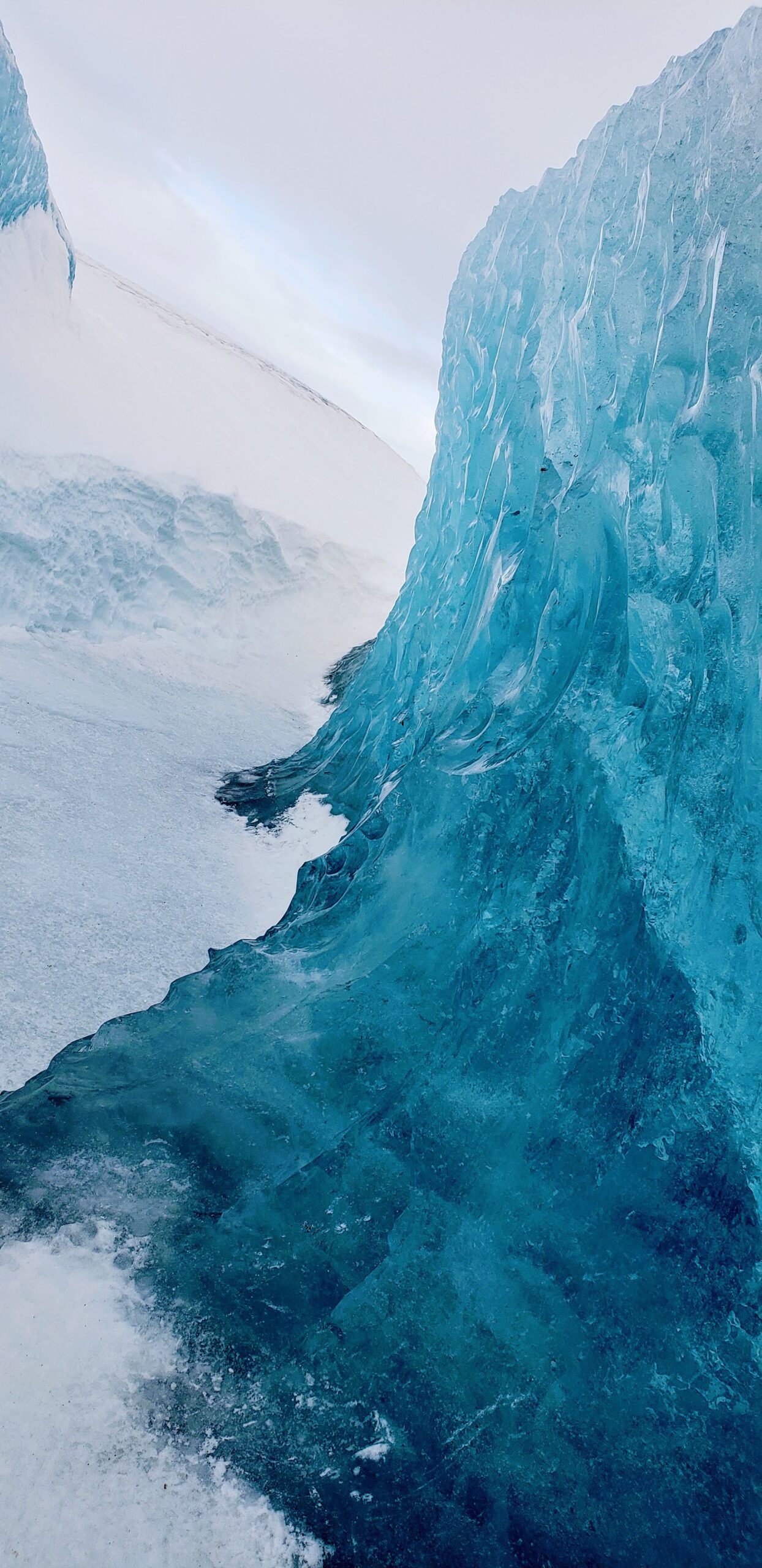
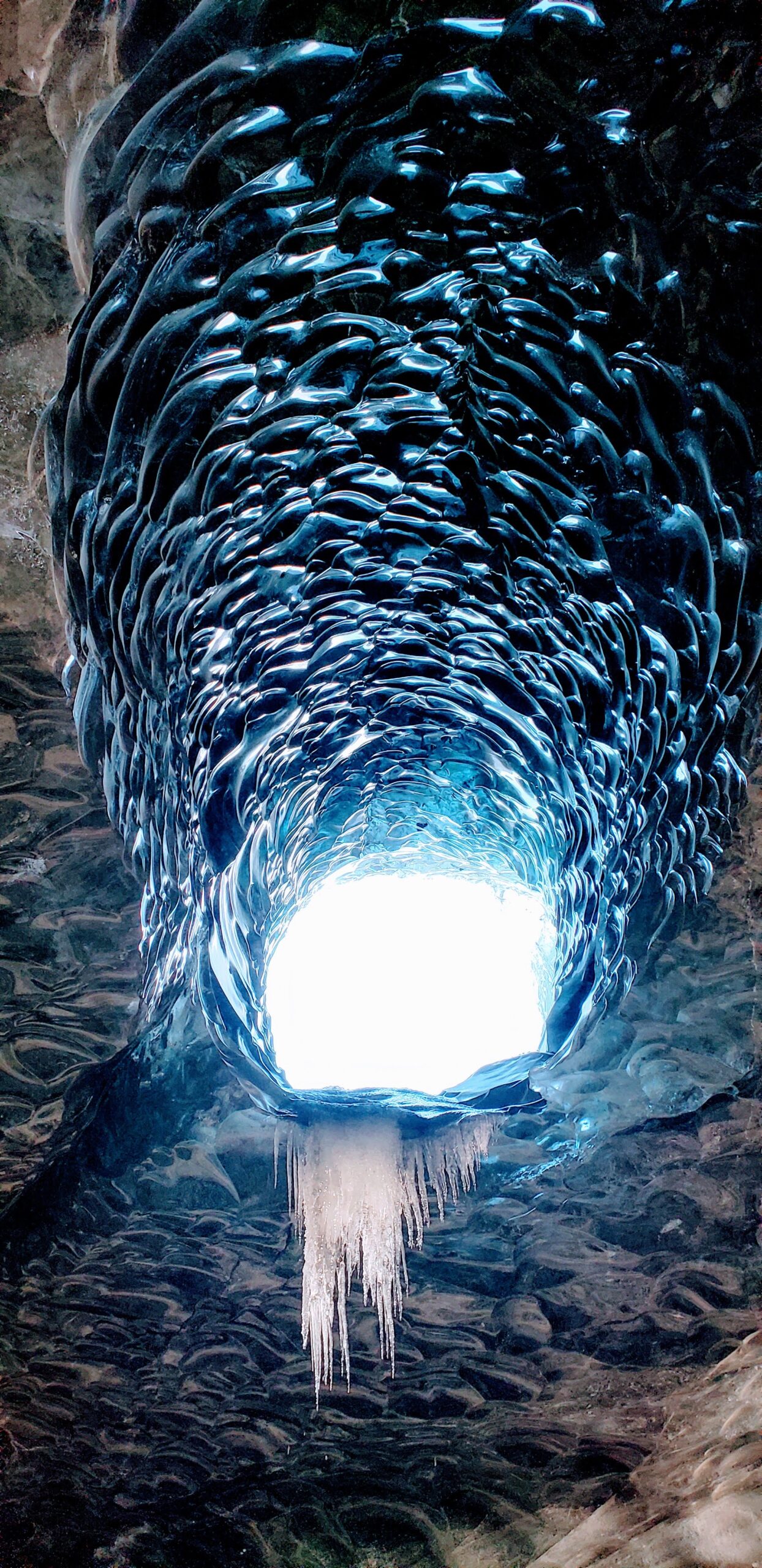
Wearing spiked crampons strapped to our boots, we hiked and then rappelled down into the glacier itself—into a cathedral of frozen time. The cave was a swirl of deep blues, smoky blacks, and icy whites, sculpted by centuries of pressure, melt, and movement. The silence inside was deafening. Just the drip of water, the crunch of ice beneath our feet, and the occasional “wow” whispered into the void.
It was colder than we expected. Quieter than we imagined. And more stunning than anything we’d ever seen.
These are the kinds of moments that change you. They remind you of the planet’s power. They make you feel small in the best possible way. And they stay with you long after you’ve left showing up in dreams, in photos, and in the way you tell stories around the dinner table. Iceland doesn’t just show you its beauty—it dares you to step inside it.
Navigating Iceland: Travel Tips, Offbeat Stops, and Cultural Surprises
Visiting Iceland is like stepping into another planet—glaciers, black sand beaches, steaming volcanic vents—and yet, it’s the small cultural details that stick with you just as much as the natural wonders.
Here are a few tips and lesser-known highlights to round out your Iceland experience:
Dress Like You’re Staying a While
The weather is a shape-shifter. One minute it’s still, the next it’s snow sideways. Pack layers, waterproof outerwear, and good boots. Microspikes or crampons aren’t just for glacier treks; they’re handy for icy sidewalks, too, but typically these will be provided for you on your tour.
Chase the Northern Lights
You don’t need to go far outside the city to find darkness—just enough to catch the aurora if it’s out. Many small-group tours will pair Northern Lights viewing with geothermal baths or traditional dinners in the countryside. When the sky lights up green and dancing, it’s worth every freezing minute.
Eat the Hot Dog
Yes, Iceland takes its hot dogs seriously—and so should you. The lamb-based pylsur (hot dog) is a staple, and the classic order is “eina með öllu,” meaning “one with everything”: crispy onions, raw onions, ketchup, sweet brown mustard, and remoulade. Bæjarins Beztu Pylsur in Reykjavík is the spot. It’s not a gimmick—it’s a national treasure.
Explore the Unexpected Indoors
When the winds pick up or your cheeks are officially frozen, Reykjavík has more than its fair share of character indoors:
- The Icelandic Phallological Museum is… exactly what it sounds like. Hundreds of preserved specimens from across the animal kingdom, presented in an oddly respectful, slightly scientific, definitely unforgettable way.
- The Icelandic Punk Museum lives in a former public restroom downtown. It’s small, graffitied, and packed with stories, sound booths, leather jackets, and a deep dive into Iceland’s rebellious music history.
- The Imagine Peace Tower, designed by Yoko Ono, is a minimalist beam of light rising into the sky from nearby Viðey Island. It’s lit seasonally, and its presence feels quietly hopeful, even against Iceland’s stark backdrop.
Ready to Plan Your Own Icelandic Adventure?
Whether you’re rappelling into glaciers, soaking in steamy lagoons, sipping schnapps with locals, or wandering through a museum full of penises—Iceland will leave its mark.
And if you want more than a standard itinerary, I’d love to help. I can build you a custom trip packed with personal touches, hidden gems, and all the things no one tells you but absolutely should.
Contact Compass & Cork to get started. Let’s make your Iceland story one you’ll never stop telling.
#Iceland #VisitIceland #LuxuryAdventure #ExploreIceland #WomenInTravel #CompassAndCork #TastedTheShark